Well, we've been sorta slack about working on the blog...but got some projects underway!
Come out to the tour and we can talk about them.
see you on Sunday!
google map:
3366 woodview drive
smyrna ga 30082
Saturday, May 15, 2010
Tuesday, February 23, 2010
Dance the Plant Fantastic: Plants I NEED to grow
For many, there is nothing more pleasurable than the anticipation of spring. For some it only means easier access to the mall, less snow, more touch football, or using the grill or getting ready to veg out (interesting term there since vegetables are always on the move--however slowly!) or other ways to escape from job. family, or whatever. For these folks gardening is nothing but more toil, another job. We're not addressing those folks and in fact they probably aren't even reading this blog.
No, we're thinking of those people who pour over gardening catalogs all winter, fantasizing about the next step in their garden, looking with wonder at what plants are available. (I can remember not too many years ago when perennials were just not that available in the Atlanta market, were considered exotics almost, or something that a relative passed along; I can even remember when Hastings, then located over off of Cheshire Bridge, has a couple of small tables of perennials and had mostly annuals [this was the same Hastings' Seed and Feed that my grandfather -- see the previous post -- would order from for his farm some sixty or more years ago.])
I have to say -- as you may have gathered by now -- that I am one of those maniacs who adores plants with great 'will power,' that is, the bigger the better especially if it can grow 12 feet in one season, or if it can take over a whole corner of the garden, or best of all, it is both huge AND odd looking. Some would say this is a character flaw, even a form of escapism from the invisibility (and some tedium let's admit) of nativistic plant life. But as one who admits of an artistic temperament, I have to say that this admiration of plants with outsized ambition and forceful revelation of its 'inner self' does reveal something of my artistic Leo temperament. Luckily there is no law against that yet. (By the way, without going into the whole thing, I found an interesting PDF of a book called Invasion Biology which I am going to pass along to you here. Be warned though that it is a 10 meg download which will commence when you click on the link. The question of exotics and 'invasions' is a very fraught question which scientists are examining -- this is an academic sort of book by the way -- questions which have ideological components as well no doubt. I only go into this now because many of the plants I am so fascinated with tend not to be 'from around here'; I suppose if one were ruthless enough one could enlist the psycho-analytic crowd to parse the apple but I think I'd rather just eat it.)
Ar any rate, herewith a few of these plants which I have lived with in my imagination for many years. Perhaps at some point they will make it into the ground.
----
The marvelous plant at the top of the page is Puya chilensis, a native of Peru. I just came across this bodacious version recently by way of the wonderful Annie's Annuals in California. A member of the Bromeliad family, it's flower stalks grow 7-12 feet tall and a basal rosette up to FIFTEEN FEET ! across! The catch is, it takes 10 to 15 years to bloom. I'll call you over when it happens. Maybe I'll try to grow the Blue Puya as well! (yes indeed, sort of a metallic, teal blue!)
And while I'm over at Annie's there are a couple of other plants that I've dreamed about, namely a couple of Echiums:
This one is a California native, E. Fastuosum but there is another more spectacular one:
Jeez, it's like sci-fi ville....or Fantasia. These like sorta dry conditions and would parobably need to coddled a lot that is, taken in and out of a warm area. Hmmm, an 8 ft tall flower stalk -- COULD be a problem there -- although I can't say that's ever held me back. These versions hail from the Canary Islands.
I've lusted after Gunnera Manicata ever since I first saw it in English gardening magazines. The sheer size of it is mind-boggling...makes me feel like a character in a Leprechaun. movie Unfortunately these plants seem to need much cooler temps than we can provide in our southern summers. I know because I killed it twice...figure I've got one last chance.
And just one more for now. I'm a sucker for all vines but Lapageria Rosea, the state flower of Peru apparently has s sort of mystical allure for me, along with some other vines which I'll discuss in the next post.I'm sure this one requires special care too, can't just plant it in the ground and run off; probably a lot of hauling back and forth. I found this one at the Potato Rock Nursery in California (incredible catalog of OTHER plants also):
to be continued.....
Wednesday, January 27, 2010
Returns
I love the picture above for several reasons. The first, but glancing reason is that it reminds me of that old photograph/poster that I've seen several times, I believe called 'Dream' (I've tried to find a pic on the net but unsuccessfully), a black and white photo of an old car beside the road; I believe the road sign had 'Dream' on it).
The second and most pertinent reason is that it's the gate of my grandparent Taylor's old seventy acre farmstead in Mississippi. For the entire time I was growing up in the small town, the road you see was a county maintained gravel road. Through the fence (which was put up after the farmhouse had basically collapsed and the road was used for dumping trash) was a small one lane dirt road, proceeding down a hill and over a small creek, a trickle most of the time but during rainy seasons all-but impassable -- and often we had to leave the family car up on the road. Finally, heading slightly back up out of the hollow, and about a half mile in, it would wind up to the small unpainted country farmhouse.
It was a hard life they lived, at least as it seems from our perspective now: a cistern beside the house with a windy series of culverts from the roof directing water to it (I remember leaning over the stone parapet, which I could barely reach, and gazing into the dark, seemingly fathomless well) and a hand pump in the kitchen; the outdoor toilet, always an olfactory adventure; and the single line of electricity powering the mournful radio up in the corner, and a couple of light bulbs, bare, here and there, but mostly using kerosene lanterns. To live in such a way was not all that unusual but now, even in recounting it, seems like another world --which it was in a way. They were almost entirely self-sufficient, cobbling together whatever needed to be repaired (no ipods, islates, pcs!) in the blacksmith shop out back. It wasn't Snuffy Smith but for kids now it would be I suppose: raggedy, a little ramshackle, it's own distinct odor of earth, chickens, sweat, and all the other emanations that comes from hard work, sunup to sundown. But you have to say that it was an environment that was all-of-a-piece, very little room for what they would perhaps have seen as a self indulgent alienation. But the vegetables were fresh, most likely picked that day, as were the eggs and the chicken Sunday dinner, often inviting the minister (or rather: preacher). It was quite something to see my grandmother grab a chicken with a long pole with a hok onthe end, drag it in like a weird beached fishchicken and at the end of the drag, wring it's neck, have it on the chopping block with its head off in just a few sesconds.
With the ideals of modernity -- basically a product of and reflection of the city -- everyone couldn't wait to move away, break the perennial cycle which land plus weather plus a shovel and plow give you...satisfying in many ways -- there's nothing like sitting on the porch at sundown on a late spring or summer day, hearing nothing but the faint tinkle of a cow's bell and then Bobwhites and Whipporwhills as the evening chill would come on and the fireflies came out.
Most folks now prefer the exciting tension of waiting in traffic, or the nightly homicide reports, or perhasp the mind numbing sameness and push of an image-intensive culture, apparently trying to remake us into something that doesn't exist. (And let's face it, county life can be intensely conservative and stultifying to many who have gone through the image training of modernism -- which is basically everyone now).
How pitiful that small remnant that's left for us, the 'garden'.....necessary perhaps but certainly not sufficient, a mere vestige, a ghostly revenant of that vast, slow vegetative wave from which we emerged and make every attempt to eradicate even as we suffer the by-now predictable occasional bouts of food poisoning from a highly mechanized and centralized food producing machine.
------
Well, I fear I've nattered on too long about all this but it is a somewhat depressing and scary time in America right now. After seeing FOOD INC. it is apparent that the woeful state of the 'Garden', in its most gneralized form is at the heart of much of the disorder which surrounds us.
A recent passage from blogger James Kuntsler puts the fork in the road ahead (how far? Can things possibly go on as they've been?) thusly in his most recent blog:
But one thing is for sure: in some form the garden, writ large or small, would be at the heart of it all -- at least until they day they can devise a gene that will allow us to photosynthesize food from our skin.
But don't hold your breath...apparently, 'the economy' has the potential of trumping everything, even common sense. Which is turning out not to be as common as we once thought I suppose.
With the ideals of modernity -- basically a product of and reflection of the city -- everyone couldn't wait to move away, break the perennial cycle which land plus weather plus a shovel and plow give you...satisfying in many ways -- there's nothing like sitting on the porch at sundown on a late spring or summer day, hearing nothing but the faint tinkle of a cow's bell and then Bobwhites and Whipporwhills as the evening chill would come on and the fireflies came out.
Most folks now prefer the exciting tension of waiting in traffic, or the nightly homicide reports, or perhasp the mind numbing sameness and push of an image-intensive culture, apparently trying to remake us into something that doesn't exist. (And let's face it, county life can be intensely conservative and stultifying to many who have gone through the image training of modernism -- which is basically everyone now).
How pitiful that small remnant that's left for us, the 'garden'.....necessary perhaps but certainly not sufficient, a mere vestige, a ghostly revenant of that vast, slow vegetative wave from which we emerged and make every attempt to eradicate even as we suffer the by-now predictable occasional bouts of food poisoning from a highly mechanized and centralized food producing machine.
------
Well, I fear I've nattered on too long about all this but it is a somewhat depressing and scary time in America right now. After seeing FOOD INC. it is apparent that the woeful state of the 'Garden', in its most gneralized form is at the heart of much of the disorder which surrounds us.
A recent passage from blogger James Kuntsler puts the fork in the road ahead (how far? Can things possibly go on as they've been?) thusly in his most recent blog:
"We can't maintain our way of life at its current scale and we have to severely rearrange and rebuild the infrastructure of it if we expect to continue being civilized. We have to get the hell out of suburbia, shrink our hypertrophic metroplexes, re-activate our small towns and small cities, reorganize the way we grow our food, phase out the big box retail (and phase in the rehabilitated Main Streets), start making some of our own household goods, and hook up the far-flung reaches of this continental nation with a public transit system probably in the form of railroads."I don't know. To try to proceed on as we always have is almost always -- except under periods of extreme crisis and threatened deprivation of many kinds both civic and physical needs -- what we most fervently wish to happen. We seem to love the purgatory that cities have held for many people and the breath of 'breathing the air of freedom' and opportunity that the city has always promised. But maybe some compromise with the contryside and technology is possible now, given the nature of theelectronic soup we now live in.
But one thing is for sure: in some form the garden, writ large or small, would be at the heart of it all -- at least until they day they can devise a gene that will allow us to photosynthesize food from our skin.
But don't hold your breath...apparently, 'the economy' has the potential of trumping everything, even common sense. Which is turning out not to be as common as we once thought I suppose.
Friday, January 8, 2010
A Winter's Garden
Here is a post I started a while ago and never finished; however, given today's below freezing temps and Southern ground clad with snow any garden planning feels like time wasted... naw, just kiddin' folks.
-Atlanta's gardeners are particularly fortunate for the winter holiday season provides a time to not only deck the halls in the home and prepare family recipes, casseroles made from the past garden season's bounty, but also here in the deep South, Autumn and Winter are seasons filled tasks to enjoy in the garden. There's just enough decay for one to see the garden with a clean slate; however, our mild climate, soft ground, unfrozen with merely a thin Jack Frost veil upon the green, and with the neighbor's Rooster I wake, pull back the drape and admire Mother Nature's son's crystals that shimmer in the Atlanta sunrise only to melt away in time for a day's digging, rearranging and late bulb planting (fingers crossed). An Atlantan may still plant cut-burlap into (spent weekend) dug hole or shrub to block off the an undesirable view; even the perennials left over from the remnants of the nursery sales can be 'stuck' in the ground last minute (again, fingers crossed). Perhaps the best part of Winter for gardeners everywhere is the time it provides for perusing the seed and plant catalogs; the colder months leave time for mental drifting in to a day's dream, sketching Spring gardens in one's mind. I do this last bit quite a lot. I think it's left over from memories of childrens books with illustrations of peach, rose and lavender colored botanical. Another childhood memory exists of making a snow angel in the Atlanta's pitiful dusting and after you make the angel, I stand up only to see bright green grass angel in stead of the white icy ones the children up North see.
Tuesday, December 22, 2009
Patience
[The incredible microphotograph above is of the seed lamourouxia viscosa, a tropical plant, a plant I know nothing about but nevertheless a surreal seed worth knowing (or at least viewing)]
Another word for gardener should surely be something like 'patiencer' or patient one. The winter season cerrtainly can try the soul of the most patient gardener. In fact THIS patient gardener has taken to hanign plants up in the bath shower (I even put up a special holder in the ceiling). But of course I have put no seeds up in the bathroom garden -- though perhaps I should -- and any true gardener will tell you that the true measure of a gardener is his/her devotion to the lowly seed and the possibiities therein. It is true that gardening centers carry seeds but for the most part they are teh same ones which we canfind later on at the same gardening center as lush, fully grown plants, ready to bear their fruit or flower. True, seeds are cheaper, you get more plants -- but you also need special condiitions if you've got the plant jones inthe middle of the winter' lighting, heat, room, etc (I remember one year I ordered seeds for a now-forgotten plant and the seed packet must have held a hundred seeds; well, not wanting to waste any thing I planted all of them and in a half-heated garage to boot. Chaos ensued.)
So one thing I have learned over the years from the plants is that it helps to know one's limitations. I gae wistfully, and even mark-up, the winter release of the Thomson-Morgan catalog along with others but I seldom order anything anymore. Lack of proper conditions trumps patience every time these days...Or maybe that's the wrong way to look at it. Maybe I'm simply uber-patient, biding my time until I can grow properly that Echium wildpretii or that Strongylodon macrobotrys, or Gunnera manicata (actually I think given up on this one--I've killed it twice already; conditions just aren't right here in the southeast, not cool enough in the summer; sometimes patience has to be tempered with a bit of resignation/knowledge) --- or a dozen others which I become obsessed with from time to time....and some would say that by all rights I shouldn't even be trying since they aren't natives by a long shot. But hope springs eternal, otherwise we would never plant anything at all, nor plan anything. Even in what seems these apocalyptic-toned times, the seed waits patiently, even if there is no one to plant it. I suppose it's easy to see how that compressed bit of energy and information we call the seed figures so prominently in popular theological discourse viz. faith. ...and why humans are now proposing and building millennium style mega-seed vaults.
Saturday, October 10, 2009
The Invisible Landscape
"I know that humanity is a door in a wall that doesn’t exist, so I can open it onto whatever gardens I like.."
Fernando Pessoa
The nature of human life seems to be to keep a very narrow focus in front of ourselves now, with the external world taking the hind most. Some things loom much larger than they maybe need to be, while other things lose some taint of necessity and fall back.
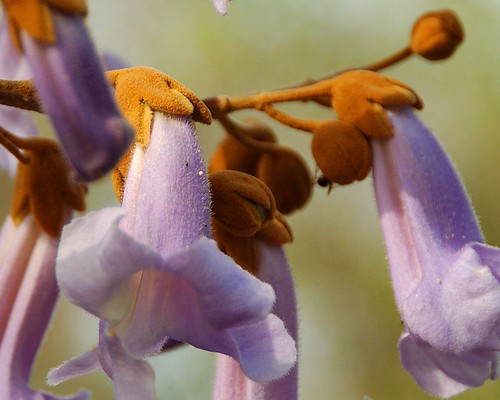
I've always been interested in micro-enviroments, those minor patches of ground which we pass everyday, with no sense of recognition. Actually, I guess mostly now these are all residues and revenants of construction and the ecology of those patches is severely constrained to infills of 'weeds' and a miscellanea of more domesticated plants that have wandered into these no-man lands. Folks pass up many interesting plants in the process though. One which I delight in telling folks about is the princess tree or Paulownia Tomentosa (also known as Empress tree and Sapphire Dragon tree). In Atlanta many folks no doubt have seen this tree growing in the crevices of concrete walls, in abandoned lots and such. As I became more sensitive to the shape of the juvenile tree – very large leaves, very tropical looking – I began to notice the enormous number of these seen-but-not-noticed plants all around the inner city (and on untended spots on the expressway also). It has the distinction of being known as the world’s fastest growing tree and as such there was an attempt not too long ago to create plantations for the wood since it is highly valued in other parts of the world for its qualities. But in the southeast it still seems to be known for its flowers. It's also called the Foxglove tree for its beautiful mauve flowers which do indeed look like those of the perennial known as Digitalis or Foxglove). You can see an online tout for it here. My father bit on the hype surrounding the Empress Tress and wanted to plant them on the bit of acreage the family had in Mississippi.. Gosh, I wish he had done that instead of planting pine trees as he eventually did. Probably wouldn't have made any money but … what a site that would have been!
No doubt there exists other oddities that surround us but which we are too preoccupied to notice. The thing about the Paulownia is that it easily makes itself known. Keep an eye out for it next time you go roaming around town – or at least the less well-manicured parts of town.
Oh yes, another plant which you can see in some untended areas around town is the Southern Catalpa (Aurea), also know as the Fisherman's tree for the large number of caterpillars which can wind up on the tree. I can remember that my grandfather in Mississippi had a pretty large one right next to his barn that we used to climb to the roof on and the Catalpa tree would be covered with caterpillars which had eaten most of the leaves by the end of spring and left just a tracery of lines. ...beautiful for us kids but kinda disgusting for some of the parental types. Very beautiful flowers -- if you can put up with the occasional worm.
Might be a good idea to take up fishing.
Or at least get out of the car and look around; no telling what you might find.
-----------------
Of course I'm just as guilty of the roving- head-in-a-moving-metal-can as the next person. One day while heading into town on Piedmont Road, turning onto Monroe Drive, Sloane said did you see that bush back there? I had not, and though we didn't stop then, we eventually did stop at the little public park and garden right at the corner of those aforementioned roads. And what a surprise! We've become so accustomed to the usual grasses, evergreens, Hydrangeas, maybe some Azaleas and the usual rightly colored suspects in the annual family (I call it Post Properties Gardening) that I don't bother examining stuff that closely sometimes.
At any rate, we stopped and I THINK the red plant was a Clianthus Puniceus: ferny leaves like a Mimosa almost and parrot-beak type flowers. Here is a picture of the actual flower and plant. But I am still baffled by another plant in the park with smooth green bark and thin tubular flowers. I can't decide whether it is a perennial that just grows really fast or is a tree like some eucalpyptus. If any one has an idea what it is, let us know. It's sorta driving me batty. This is a guest designed park and with plants (or at least some of the plants) being donated by the donor. The donor is the guy who owns Very Good Plants out in Lithonia. I’ve been out there and it is indeed a nice little boutique nursery. I'll probably wind up calling them up and asking them what the heck the thing is. It's a neat little garden. Stop and check it out before the cold hits. For the more goth among us, there is also a neat dead fountain in front, with stuff growing in the cracks.
Sunday, September 13, 2009
Rationing out the rational: Where'd the garden go?!
Rationing out the Rational: Where'd the Garden Go?!
I suppose most folks would not put the word ‘rational’ in the same sentence with gardening, a hesitation I am in agreement with.
When we think of rationality, we think of the world of work and the necessity that one thing follow another with a sort of inexorable logic. We associate it with science and with bureaucracy also, as well as with the working of the machine. To be rational is to be like Mr. Spock from Star Trek: cool, calm, collected and unflappable.
At this late date in Enlightenment virtues and after world wars and any number of minor and on-going wars, rationality doesn't seem all that it is cracked up to be. And nothing shows that better than the garden….and things, areas, that seem to be gardens but aren't really, are really forms of bio-commodity. Just think of the continent long strip 'garden' formed by the medians and sides of the highway system, the rationalized, Fordist plantings on all the big apartments, townhouses, etc.
I had reason to go northwest in the state recently but still inside the vast pan of development that now forms the Atlanta development area. If you noticed the picture which acts as the introduction for this issue, you will see a representative sample courtesy of Google Earth: a long stretch off of i-20, winging our way through continuous strip malls with all the franchises you come to know ad nauseum, finally winding up in vast developments and projects in the valleys and foothills leading into the north Georgia mountains. Vegetation is mostly scrub pine and mimosa and a few oaks all along the way, a vast green wall punctuated by oil change franchises, fast food joints, big box stores, and then repeating the cycle again and again until it appears to wane along country lanes---except now grossly laid out here and there with these independent mega-burbs (with mega-sized houses of course) with the traditional six foundation plants, maybe a Japanese maple in the front, maybe a Clematis feebly climbing up the post box pole. There seem to be hundreds of acres of these non-gardens allied with their houses, all crawling up the hills and lopping into the valleys. Like Levittown, maybe they’ll change into something less aggro-android and something that seems more attuned to a life well, if perhaps more simply, lived. Somehow I doubt it. Nonetheless, I am thrown into a giant depressive stupor on the final leg of the journey and on the way back. Its odd, but I'm not exactly sure why; after all, this is the way life is lived now; who am I to gainsay it? We’ve somehow traveled back in time to the cookie cutter fifties, except with a gigantoid vengence. This is the way the future will play out and IS playing out in exurban areas all over the USA. This is rationality with a vengence and with the feel of an unstoppable logic all its own that is indeed tied into the modern zeitgeist. (There are those like Jim Kunstler whose writing I have great affection for but which seems lost in a terrible fog after I actually go out into –well, into every place other than where I am now ) This is the rational logic (which at the end of its tether becomes ir-rational) and place to which our modern life has led us (and by modern I mean the last 250 years --- well, maybe even the last 2500 years).
--------------
Well, the logic of the modern aside all, one can do, in the final estimate. is to do what one does. This last Freedonia project ( Vicki calls it the Friendship Gate and the Pacara gate from Inca Trail at Puca Pacara in Peru) has nothing of the 'logical' about it; or rather its logic, like most of the work I do, is tied to a very situated particular, a relationship between what I am able to pull off artistically, how far the client will let me push that exploration, and the area in which that exploration is to occur. In that sense, it comes closer to the expectations that occur with sowing seeds or planting a plant: you do the best you can it considering all the relationships of place, time, person, ability … and then let it develop. There is certainly an inner push outward that develops. And perhaps this could indeed be called a logic but a logic of the garden, of the bios, of zoĆ« as the Greeks called life, except realized in concrete and tile. And ideally there is a somewhat explosive semiotic (associated with this particular piece anyway), a verging away in different directions of symbolisms, signs, portents, aspects, a series of different reading by whoever sees it yet still circling around to its concrete placement.
Those who would want it transplanted (as would be the case with those mega-burbs earlier) and tendered into a sameness would be out of luck --- like a particularly satisfying saxophone solo: couldn't repeat it if I wanted to.
Subscribe to:
Posts (Atom)